Showing posts with label News. Show all posts

Thursday, June 27, 2019

At NAFSA conference, Virginia Tech lays the groundwork for new international partnerships

Don Back, director of the Virginia Tech Language and Culture Institute, talks with visitors at the university's booth at the NAFSA Annual Conference and Expo in Washington, D.C.
At the world’s largest gathering of professionals in international education — where almost two dozen faculty and staff members represented Virginia Tech — the university laid the groundwork for new international programs and partnerships.

“Being at an event such as NAFSA helps us tell Virginia Tech’s story,” Language and Culture Institute Director Don Back said.

For the first time, the university was an exhibitor at the annual conference for NAFSA: Association of International Educators, the largest nonprofit association dedicated to international education and exchange.

“Virginia Tech is an internationally recognized land-grant university, and NAFSA attendees are a key audience invested in promoting international education,” Back said. “Through dozens of meetings at our booth and elsewhere at the convention, we strengthened relationships with existing partners while also laying valuable groundwork for new ones.”

Read more at VT News

Thursday, March 12, 2015

Language program helps Malaysian teachers speak better English in their classrooms

Claire Peters (right), assistant principal at Washington-Lee High School in Arlington, Virginia, gives a tour to Virginia Tech Language and Culture Institute instructor Christine Bobal (second from right) and a group of visiting high school teachers from Malaysia.
Nolie Binti Shamshudin, a math teacher taking part in a Virginia Tech Language and Culture Institute program, expected to improve her English and learn to better integrate technology into her classroom in Malaysia. Among the skills she did not expect to pick up: throwing a snowball and making snow angels.

More accustomed to the tropical greenery of Southeast Asia, she found herself knee-deep in the wintry weather of the National Capital Region, where Virginia Tech's facilities include a learning center in Fairfax.

Read more

Thursday, December 18, 2014

LCI strengthens universities in Iraqi Kurdistan

Participants in the Iraqi Kurdistan Rural Universities Partnership Program pose on graduation day with professors and administrators from the LCI.
When a university group from Iraq's northern Kurdish region traveled to study at Virginia Tech this past summer, their home was at peace. 

But by the time the 14 administrators and faculty members arrived in Blacksburg, fighters with the Islamic State had taken surprise aim at the region's capital, and more than 1,700 people had been killed.

"In our region, there was an anxiety against these terrorist forces, but when we left, there was not the sense that Irbil was in danger," said Hawraz Hama of the University of Raparin, about 70 miles east of the Kurdish capital.

Despite the turn of events, he and others in the delegation stuck to their training commitment: "In our country higher education needs to be improved."

Read more about the program, which has just been renewed for another year.

Monday, November 10, 2014

LCI names Sondra Schreiber as student services director

Sondra Schreiber has been named the assistant director for student services at the Virginia Tech Language and Culture Institute.

As part of the administrative team, she will counsel the institute’s staff and students on immigration matters, provide academic advising and placement assistance for prospective university students, and develop engagement programs with the greater university and local communities. 

“I am looking forward to getting to know our students and supporting them during their transition to the United States and throughout their stay,” Schreiber said.

Friday, October 17, 2014

Eric L. Moore to oversee testing at Language and Culture Institute

Eric Moore
Eric L. Moore has been named the testing and assessment coordinator at the Virginia Tech Language and Culture Institute.

He replaces Charlene Dandrow, who became the associate director of the institute’s new program at Radford University.

 As part of the administrative team, Moore will be responsible for testing programs in Blacksburg and Radford as well as the institute's recently opened site in the Washington, D.C., area. He will supervise the process of exam production and the development of all classroom assessment tools and rubrics. He will also coordinate TOEFL testing in Blacksburg.

Read more about Eric.

Monday, October 6, 2014

Virginia Tech program helping strengthen universities in Iraqi Kurdistan

Participants from the Iraqi Kurdistan Rural Universities Partnership Program show off their certificates and pose for a photo with faculty and staff from the Virginia Tech Language and Culture Institute.

When a group of university administrators and faculty members from Iraq’s northern Kurdish region left home to study at Virginia Tech this summer, the area was at peace. But by the time the 14 educators arrived in Blacksburg, fighters with the Islamic State had unexpectedly taken aim at the region’s capital and more than 1,700 people had been killed.

The university group was part of an innovative program designed to reform curriculum and instruction in rural Kurdistan. Participants say the program, which has just been renewed for a second year at Virginia Tech, is vital because strengthening the region’s education system is key to fostering long-term stability and preventing the rise of militant groups such as the Islamic State, also known as ISIS or ISIL.

Don Back (left) and Paiman Ahmad
“Universities are the places where we can lead society to be a model society,” said Paiman Ahmad, a participant from the University of Raparin. “When we build up our education, we start seeing improvements elsewhere.”

Funded by the U.S. Embassy in Iraq and run by the Virginia Tech Language and Culture Institute in partnership with the Washington nonprofit IREX, the Iraqi Kurdistan Rural Universities Partnership Program was designed to strengthen university administration, modernize course content and teaching methods, and improve English-language instruction. In addition to Raparin, the program also includes the University of Halabja and the University of Zakho. Each of the universities was founded in the past 10 years.

“One of our main goals was to move from a ‘classical’ model of teaching, where a professor stands and lectures with very little interaction with students, to a ‘modern’ model and student-centered teaching,” Ahmad said. “The old way is common across Iraq, but we are younger, we want to embed new technology, new pedagogy to help us stand out.”

Lori Mason, the project director at IREX, said the U.S. Embassy has a very keen interest in supporting these rural universities. “The Iraqi Kurdistan region has been developing very quickly over the past 20 years. In the urban areas, the development is rapid, and there are a lot of opportunities for engagement with the outside academic community. That hasn’t been the case for the rural university,” she said. “For the most part, these institutions are young, the faculties are young, and they embrace change really very quickly. In that sense, they’re a good fit for introducing these types of [student-centered] ideas because much of it is implemented in terms of their own individual classroom instruction.”

Elsie Paredes, Sabah Sulaiman Haji, and Liz Bowles
The program was designed so that colleagues in Kurdistan and the U.S. could develop mutual understanding and cultural awareness in order to establish sustainable relationships and professional networks for academic collaboration.

Don Back directs the Language and Culture Institute and led workshops for the Kurdish administrators. He said the program is an example of Virginia Tech’s land-grant mission.
“From a global higher-education perspective, it’s in the interest of both U.S. and international universities to form partnerships,” Back said. “Such collaborations allow us at Virginia Tech to really share the best of our university while also helping address the specific challenges that confront Iraqi Kurdistan.”

Ultimately, he said, the partnership could lead to collaborative research opportunities and student and faculty exchanges.

The program began in January with intensive workshops in Irbil, the capital of the semiautonomous Iraqi Kurdistan region. Led by faculty from the Language and Culture Institute, the training focused on topics such as curriculum design and instructional methods for English language faculty as well as academic leadership. Participants were introduced to tools such as Moodle, an open-source learning platform. Ribwar Mohammed, who is in charge of curriculum development at Raparin, said his university is already using the online site to help professors interact with their students.
Back said Moodle allows Raparin faculty to put syllabi online and provides greater access to students. “It’s gratifying,” he said, “to see firsthand something that we had introduced being very effectively used.”

Hawraz Hama (left) talks with VT's John Dooley.
Following the workshops, the institute’s faculty led semesterlong online courses. “It was intensive training,” said Hawraz Hama, the chair of Raparin’s English department. “We faced different assignments regarding leadership, professional development, university governance, and being a good leader. It was also good to be introduced to so many new online tools.”

He said his department, which he has led for the past two years, is facing growing pains. “When I graduated from high school in 2003, Iraq was under the process of being liberated by American and coalition forces from Saddam’s regime. The demand for learning English was immediately increased, and it’s only continued to grow since. Our [English department] is growing, because the demand is increasing every day.”

The program’s capstone experience brought the Kurdish educators to Virginia Tech for three weeks. For many, it was their first trip to the United States.

“Before coming to Virginia Tech, most of my information about the United States came from TV or movies,” Hama said. “I expected that American people are, let’s say, not helpful, based on the movies. But when I arrived in Washington, and at Virginia Tech, I found that on the contrary, American people are very helpful and very friendly, and they are ready to help if you need help.”

In Blacksburg, participants met with university leaders, observed classes, conducted research, and participated in a variety of cultural experiences, including a trip to hear the old-time music at the Floyd Country Store’s famous Friday Night Jamboree and a hike up the Cascades.

“The participants were all highly motivated and appreciative of this partnership and the educational activities that we conducted,” said Elsie Paredes, associate director of the Language and Culture Institute. “During the seminars, the discussions and conversations were very profound and engaging. It was a true learning experience for me, not only in regards to the culture, but also the personal stories of some of the participants who shared them with us.”

Omar Fouad Ghafor (left) and Barzan Hadi Hama Karim
Mohammed said he was returning home with a sense of optimism, despite the ongoing violence. “I have lots of ideas now on how the University of Raparin can continue to succeed,” he said.

Hama was similarly enthusiastic. “This trip to Virginia Tech could be a turning point in my professional life,” he said. “The quality of the instruction, the topics, the teachers, the excursions – all of them have been fantastic.”

Hama said he has already instituted changes at his university based on what he learned during the program. The university has approved curriculum reforms that he says will better prepare future English teachers. Courses on some traditional linguistic subjects were eliminated and ones on classroom management, teaching methodologies, and materials design were added. Hama said the Virginia Tech program “accelerated the process of improving the quality of education at our new established universities.”

Back said IREX has approved Virginia Tech to continue the program in 2015.


Read more:

Tuesday, August 12, 2014

WVTF story: Iraqi Kurds in Virginia

Participants of the Iraqi Kurdistan Rural University Partnership Program pose with administrators from the Virginia Tech Language and Culture Institute during a reception at The Inn at Virginia Tech and Skelton Conference Center.
A group of Academics from Kurdistan, visiting Virginia Tech for 3 weeks this month, has watched from afar as their homeland faces attack by ISIS militants.

The group is here studying higher education practices and principles in order to bring them back to their home universities. It’s funded by the U.S. State Department and the Iraqi Embassy. When they left home, Kurdistan was in peace.

"We are not as safe as before we came here.  When we depart Kurdistan it was absolutely safe. Still we are safe but we are under the threat of these new terrorist groups," said Barzan Karim, from the University of Halabja.

Read more and listen to the radio story by WVTF's Robbie Harris.

Friday, January 24, 2014

LCI partners with Radford University to open new center

Virginia Tech has partnered with Radford University to establish the Language and Culture Institute at Radford University.

The collaboration combines the 40 years of experience the Virginia Tech Language and Culture Institute has in providing English language programs and the unique academic opportunities available at Radford.

Operated by the Virginia Tech Language and Culture Institute, the new center will provide instruction in English language and academic study skills geared toward international students while also facilitating intercultural understanding and offering support and guidance on nonacademic issues. The institute is scheduled to open in March.

Read more here.

Tuesday, October 1, 2013

Read more about the LCI's new assistant director

Daniel Gerbatch has been named assistant director for admissions and recruitment at the Language and Culture Institute.

In the newly created position, Daniel will be responsible for administering and coordinating the conditional admission program for the institute. Through this program, students who otherwise meet Virginia Tech admission requirements but do not meet the minimum English language requirements and may not yet have taken the SAT are offered conditional admission status at the university pending their successful completion of English and test requirements.

Find out more about Daniel on the VT News site.

Monday, December 10, 2012

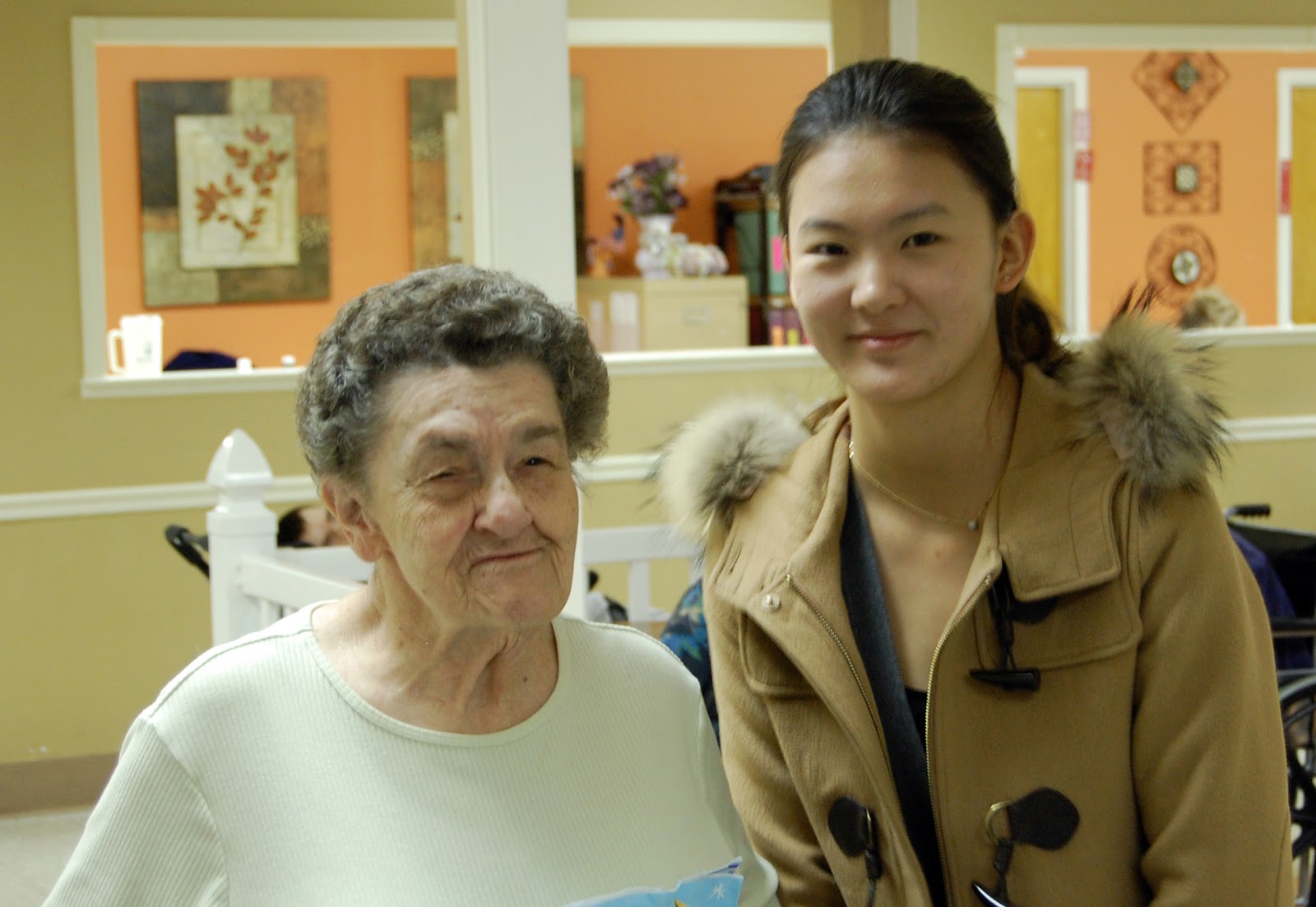
Students bring holiday cheer to Blacksburg nursing home

A number of Language and Culture Institute students made a gray Monday a bit brighter for some local nursing home residents.

Kay Gude and about a dozen of her students, plus Linda Sanford, visited Heritage Hall on South Main Street in Blacksburg. There, they handed out more than two dozen presents neatly packaged in festive bags to some of the men and women in long-term care.

"We went to Wal-Mart and Dollar Tree and picked out gifts based on what they liked and what they needed," said student Amwaj Al Bahar, of Kuwait.

Students visited with the residents and took photos with them as they delivered the presents. "They're like the little Santa elves!" Gude said as she pushed a cart full of gifts down a hallway.

These sorts of visits make the residents smile, said Sherry Reynolds, the activity director at Heritage Hall. "They like seeing the young people and being around the young people," she said. "This really brightened everyone's spirits."

(Click on a photo to see a larger version.)


Friday, August 12, 2011

VBI Launches Global Summer Research Institute

Download flier

The Virginia Bioinformatics Institute (VBI), in close cooperation with the Virginia Tech Language and Culture Institute (VTLCI), has launched the Global Summer Research Institute (GSRI). To take place May 29th through August 4th, 2012, GSRI will provide international interns the opportunity to engage in scientific research at a world-class university, assisting those without this experience to build their credentials for graduate study.

Reinhard Laubenbacher, Director Education and Outreach at VBI, states, "Education initiatives at VBI are designed to identify and groom our next generation of scientists. We are excited to offer the Global Summer Research Institute, which combines integrated interdisciplinary research team activities with workshops on leadership, presentation skills, team-building, and writing skills."

During their time at VBI, interns will work closely with an interdisciplinary team on a research project. They will receive guidance in developing graduate applications, giving talks on their projects, and writing scientific reports and papers. At the close of the institute, successful participants will receive a certificate of completion and a letter of recommendation from a sponsoring professor.

The VTLCI will assist VBI in promoting the program through its international contacts and university partnerships. “We will be actively showcasing the GSRI to some of the most prominent universities in the world, seeking their best undergraduate talent for participation in this unique, highly selective program,” says VTLCI Director, Don Back. “We aim to attract this talent to Virginia Tech later on for their graduate work.”

For more information and to apply, please visit: http://gsri.vbi.vt.edu.

About the Virginia Bioinformatics Institute
The Virginia Bioinformatics Institute at Virginia Tech is a premier bioinformatics, computational biology, and systems biology research facility that uses transdisciplinary approaches to science, combining information technology, biology, and medicine. These approaches are used to interpret and apply vast amounts of biological data generated from basic research to some of today’s key challenges in the biomedical, environmental, and agricultural sciences. With more than 240 highly trained multidisciplinary, international personnel, research at the institute involves collaboration in diverse disciplines such as mathematics, computer science, biology, plant pathology, biochemistry, systems biology, statistics, economics, synthetic biology, and medicine. The large amounts of data generated by this approach are analyzed and interpreted to create new knowledge that is disseminated to the world’s scientific, governmental, and wider communities.

About the Virginia Tech Language and Culture Institute
Part of the Office of Outreach and International Affairs, the Virginia Tech Language and Culture Institute (VTLCI) supports the university’s engagement mission by leveraging international partnerships and programming to attract the best and brightest students and professionals from around the globe. Through its efforts, the VTLCI exposes domestic students to other cultures, values and languages, enriching discovery and learning and contributing to the diversity of the university community. VTLCI has locations in Blacksburg at the main Virginia Tech campus and in the National Capital Region at the university’s Northern Virginia Center. The institute hosts over 500 students per year from over 30 countries spanning the globe, served by over 50 professional faculty, instructors and staff.

Contact:
Tiffany Trent
ttrent@vbi.vt.edu
540-231-6822

Tuesday, August 9, 2011

Falls Church VTLCI Students Publish On-line Paper

"We have a planetary emergency. Addressing this challenge needs to become our mission."  This noble challenge comes from VTLCI American Media student Amira Kefi in a commentary on global warming.  Mohamed Khaled Mohamed Nafadi informs that the word Ramadan "is derived originally from the Arabic word 'Al-Ramadi' which means intense heat and thirst."  The word also refers to the ninth month of the Islamic calendar.  Ibrahim Yahaya Ibrahim recounts the history of the Fulbright international exchange program, which was ironically funded by proceeds from the sale of surplus war property after World War II.  And where could you find such an interesting diversity of stories and views but in VTLCI classes?

Congratulations go out to Falls Church VTLCI students and instructor, Michele Clark, for their on-line student newspaper, "The VTLCI Student Times."  Published August 9, 2011, this first edition of the Times was designed, developed and written by the American Media class. The paper contains articles on Ramadan, cultural diversity, local politics and the VTLCI.  And what better way to gain insight than to actively explore?  "A Different Side of Virginia," for example, was written by a young Saudi woman, Ghadah Alanzy, who learned more about democracy by attending a fund-raising dinner for a local politician.  More than improving their English, Ghadah and these other burgeoning journalists are undergoing a transformational experience at Virginia Tech through their immersion in American life and culture.

The VTLCI Student Times may be accessed at http://vtlcinews.wordpress.com/.  Authors are looking for feedback, and so readers are encouraged to comment on the site. 

Video: Virginia Tech Humphrey Fellows Celebrate Leadership Studies and Language Skills


Eddy Bongwele Is Akaala of the Democratic Republic of the Congo is grateful for his new English language facility.


BLACKSBURG, Va., Aug. 9, 2011 – Eddy Bongwele Is Akaala of the Democratic Republic of the Congo says, "I have learned in the United States that we can build our world together and make our society very good for us and for future generations." He, like other Humphrey Fellows studying at the Virginia Tech Language and Culture Institute, appreciates the opportunity to study leadership and improve his English-language skills.

Virginia Tech’s Outreach and International Affairs supports the university’s engagement mission by creating community partnerships and economic development projects, offering professional development programs and technical assistance, and building collaborations to enrich discovery and learning – all with the overarching goal of improving the quality of life for people within the commonwealth and throughout the world. Outreach and International Affairs leads Virginia Tech’s presence on five continents; its regional research and development centers across the commonwealth focus on graduate education and professional development. Blacksburg-based centers are dedicated to student engagement, language, policy, and governance.